Grevy's zebra, reticulated giraffe, Somali ostrich, gerenuk and beisa oryx: five animals of Kenya's dry north, and how to tell them from their southern cousins.
Most visitors to Kenya know the Big Five. In the hot, dry north, around Samburu National Reserve, there is another set to look for: five animals adapted to arid country and rarely seen further south. Together they are known as the Samburu Special Five.
Grevy's zebra
The largest wild zebra, and one of the most endangered. Compared with the plains zebra, it has narrower, closer stripes, a white belly and large, rounded ears.
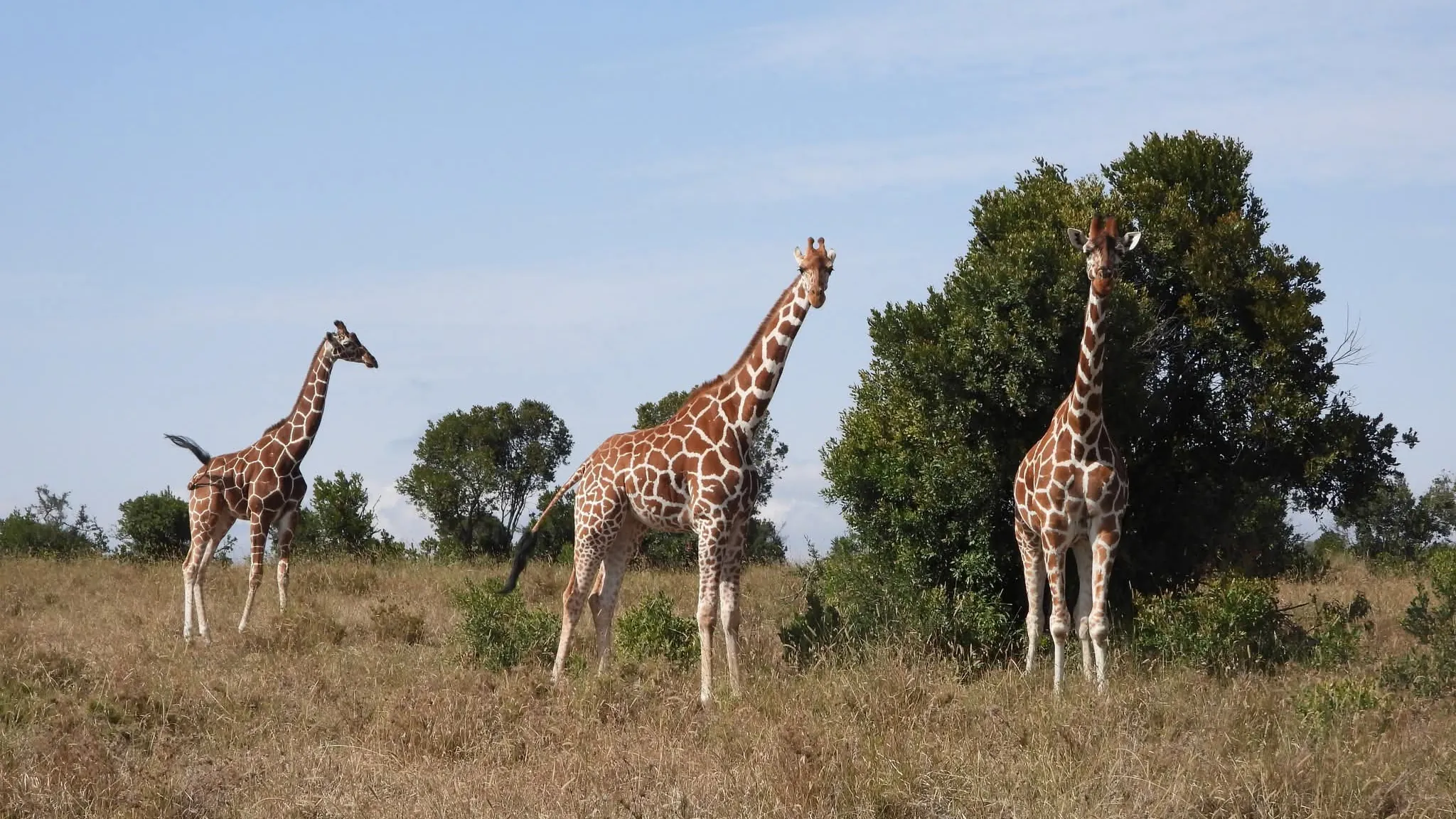
Reticulated giraffe
Its coat is a striking net of large, sharp-edged brown patches separated by bright white lines, much neater than the blotchy pattern of the Maasai giraffe in the south.
Somali ostrich
The males have blue-grey necks and legs, instead of the pink of the common ostrich. They are easiest to spot in the breeding season, when the colour deepens.
Gerenuk
A slender antelope with a long neck. Its name comes from the Somali for giraffe-necked. It stands upright on its hind legs to browse leaves out of reach of other antelope, and it can go without drinking, getting the water it needs from its food.
Beisa oryx
A sturdy antelope with long, straight horns and bold black-and-white markings on its face. It is superbly adapted to heat and can live far from water.
Where to see them
The best place is along the Ewaso Nyiro River in Samburu, where wildlife gathers to drink, especially in the dry months. A full day in the reserve, rather than a single drive, gives you the best chance of finding all five. Our Samburu and Ol Pejeta safari includes a full day with a picnic lunch, then moves on to Ol Pejeta for rhinos.